
camino Day 3: zubiri to Pamplona
The Day That Abby Failed…
I sat on a bus watching the Arga River valley scroll past the window while Ryan walked 22 kilometers through it. Not my proudest Camino moment, but my knee had been throbbing since that brutal Day 2 descent through the Pyrenees, and by morning it was screaming at me to stop pretending I was fine. Sometimes the bravest thing a pilgrim can do is sit down.
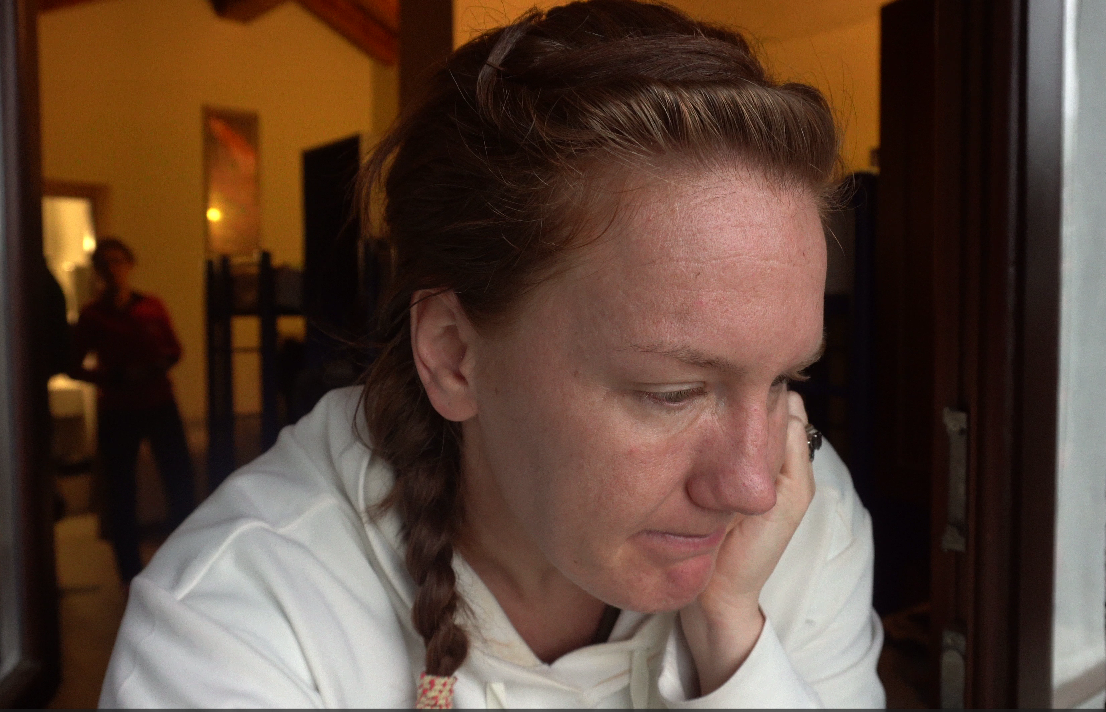
Sad Abby…All Alone in Pamplona
Which is a shame, because Stage 3 of the Camino Frances is supposedly one of the pretty ones. The trail follows the Arga River from Zubiri into Pamplona, winding through a string of tiny villages that feel like they haven't changed in centuries. The terrain is flat, the scenery is green, and the whole thing ends with a dramatic entrance through medieval city gates. Ryan got to experience all of that on foot. I got a window seat and a nap.
When You Need To Stop Walking
Here's something the inspirational Camino blogs won't tell you. Getting hurt or exhausted on Day 3 of a 500-mile walk feels like failure. You see other pilgrims powering through, and every cell in your brain tells you to suck it up and keep going. But if you push through an injury this early, you're not being tough... you're just choosing to quit on Day 8 instead of resting on Day 3.
I'd pulled a groin muscle on the descent, and by Day 3, most of the pain had migrated to my knee. That part was new and scary. I had no idea what was happening, but I knew I didn't want a permanent knee injury from a walk I'd barely started. So I had a choice. I could limp through Stage 3 and risk making it worse, or I could take the bus, rest in Pamplona, and actually finish the Camino. I picked the bus.
After three full rest days in Pamplona, my knee healed completely. It turned out to be nerve-related from the groin strain rather than anything structural. If I'd walked on it, I might still be sitting in a clinic in Navarre.
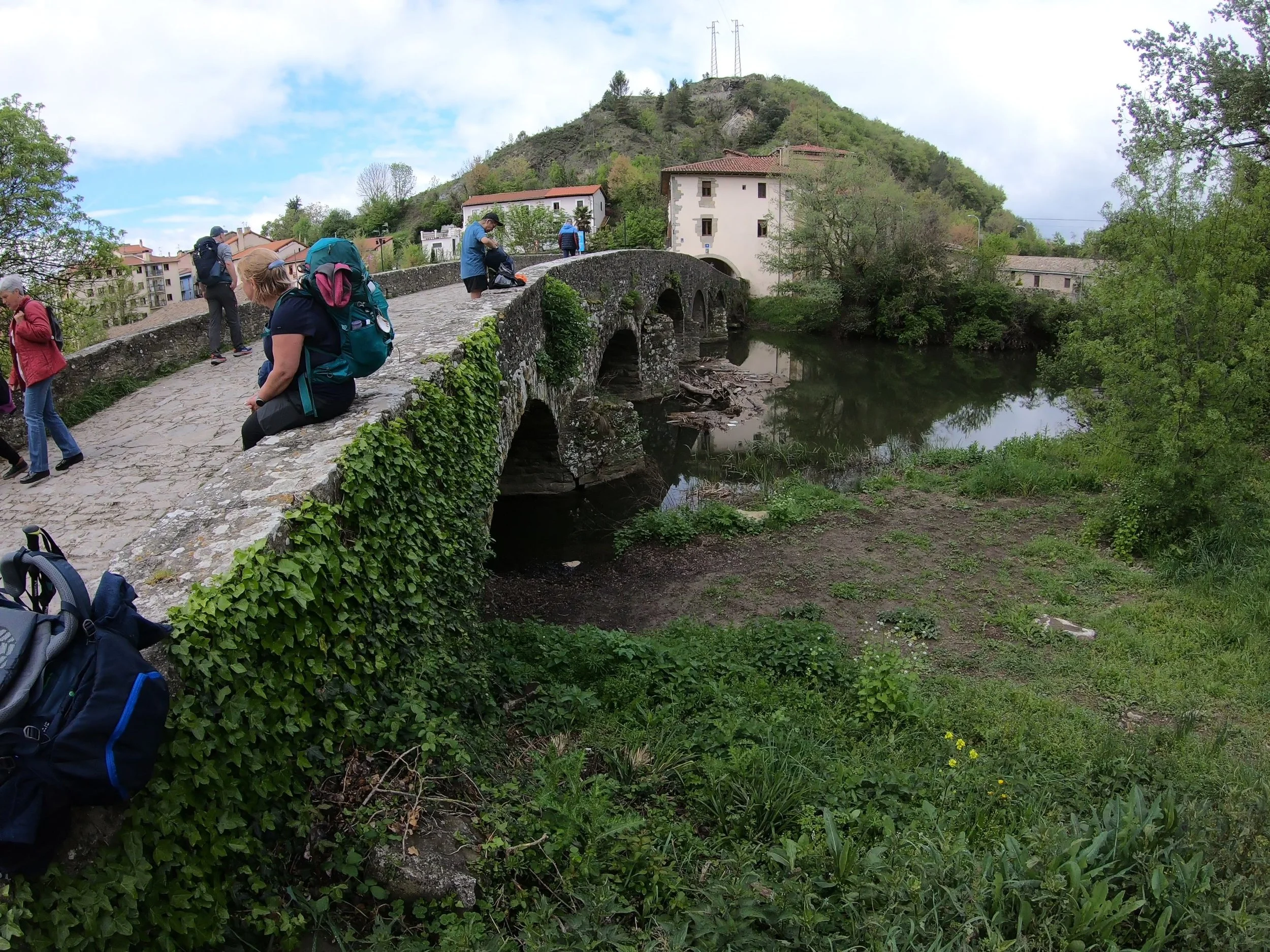
The Route Along the Arga
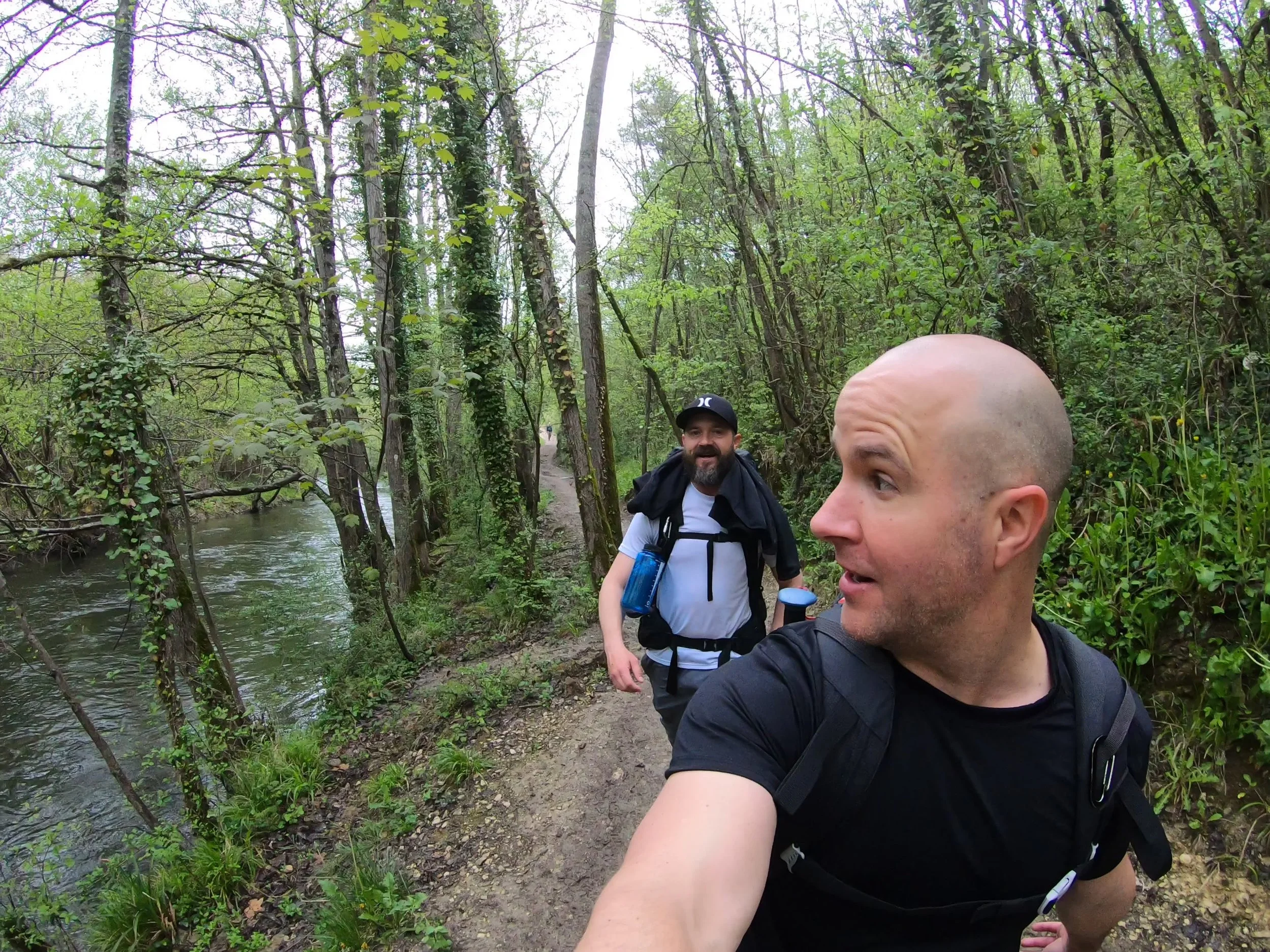
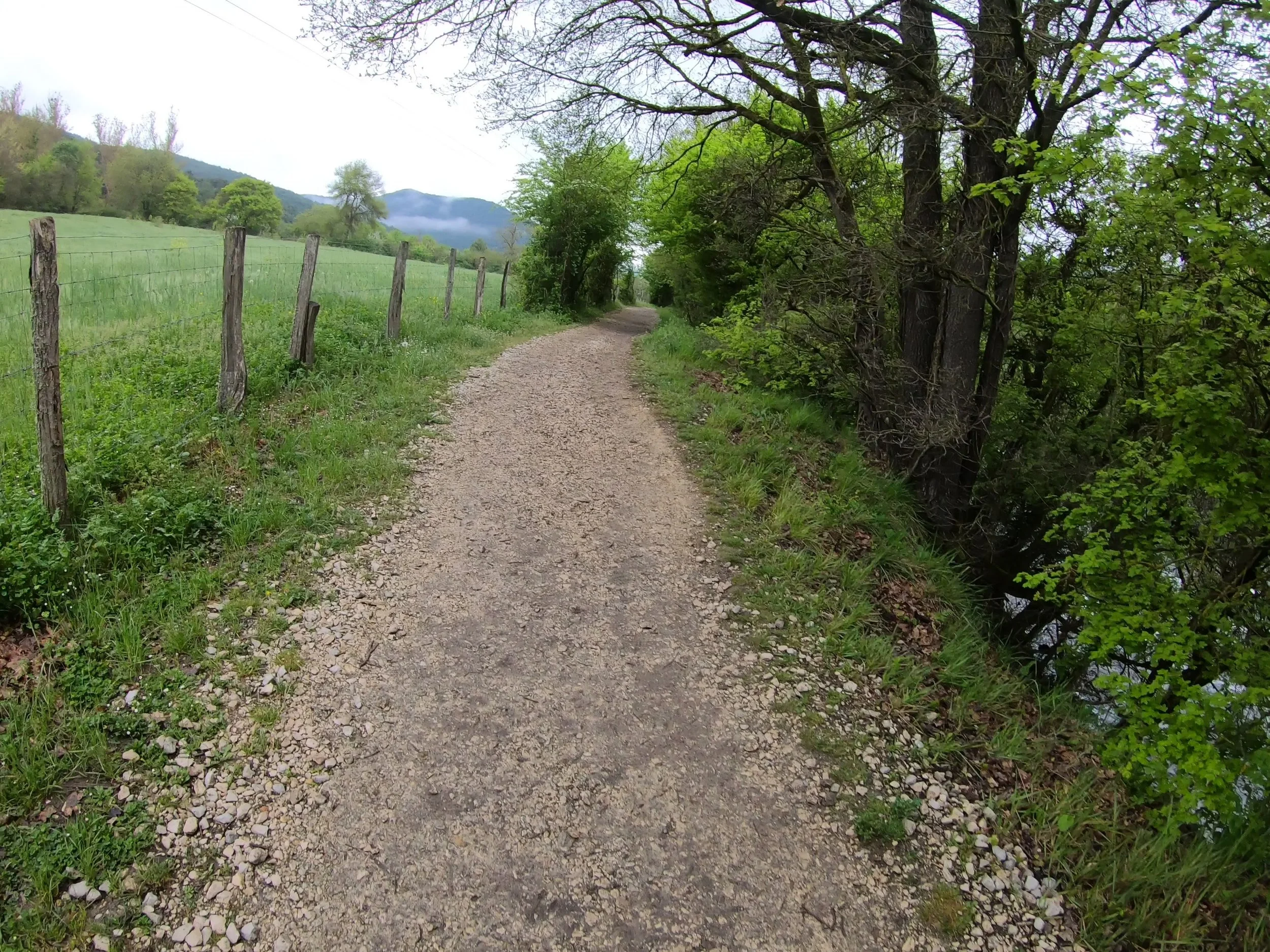
Ryan left Zubiri early with our friend Scott while I caught the bus ahead to Pamplona. He described the walk as flat and pleasant, following the Arga River through green valley floor for most of the day. The river reminded him of Arkansas (which is either charming or insulting, depending on how you feel about Arkansas).
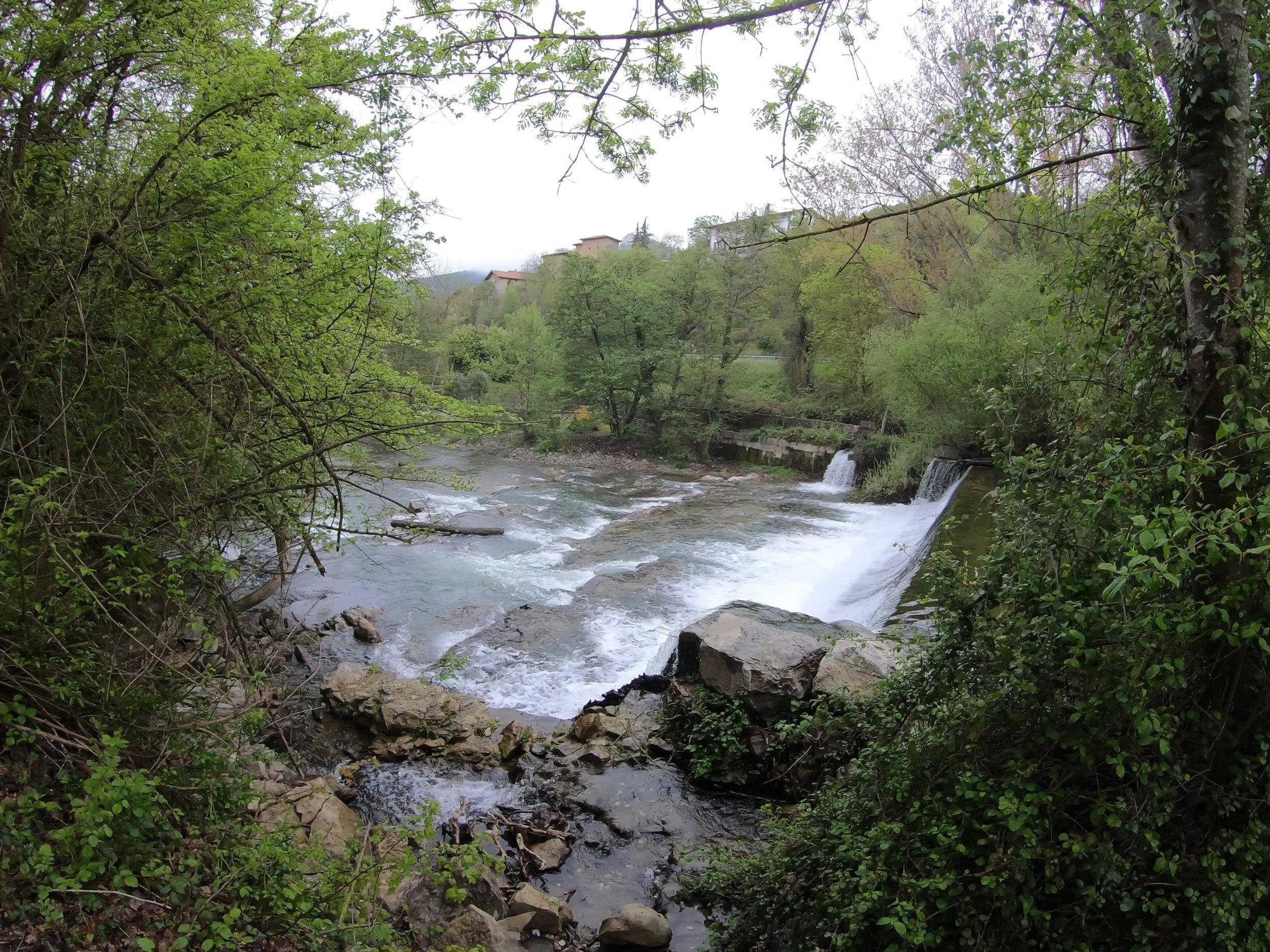
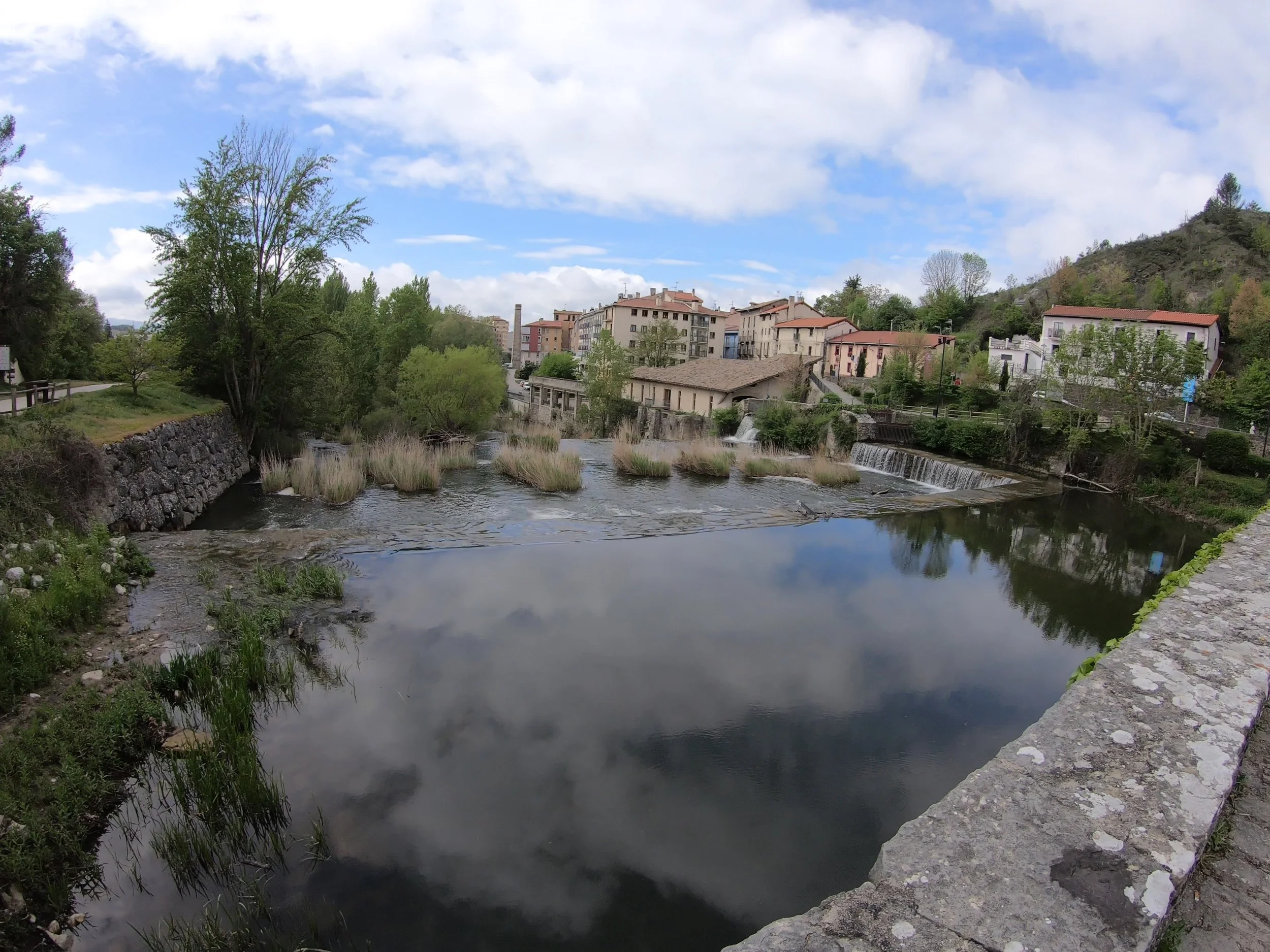
The trail threads through a series of small villages where the Camino is often the main road running through town. You pass through quiet places with stone houses and church bells that seem to ring just for pilgrims. The path stays close to the river, crossing it a few times on old bridges before the landscape starts to shift from rural to suburban.
Villages You'll Pass Through
- Ilarratz
- Ezkirotz
- Larrasoaña
- Akerreta
- Zuriain
- Irotz
- Zabaldika
- Villava
- Burlada
Larrasoaña is the largest stop along the way and a good place to grab water or a snack. Irotz has a small Romanesque church (San Pedro) that's worth a glance, and the Trinidad de Arre monastery near Villava marks the unofficial gateway to Pamplona's outskirts.
Most of the other villages are blink-and-you'll-miss-them clusters of a few houses along the trail. The suburbs of Villava and Burlada signal that you're closing in on Pamplona, though the last stretch through the outskirts feels longer than it should.
Entering Pamplona Like a Medieval Pilgrim
The payoff for that suburban slog is one of the best entrances on the entire Camino. You cross the Puente de la Magdalena, a Gothic bridge over the Arga, and walk straight through the Portal de Francia into Pamplona's Old Quarter. Pilgrims have entered the city this exact way since the Middle Ages, and the stone archway still hits different after a full day of walking.
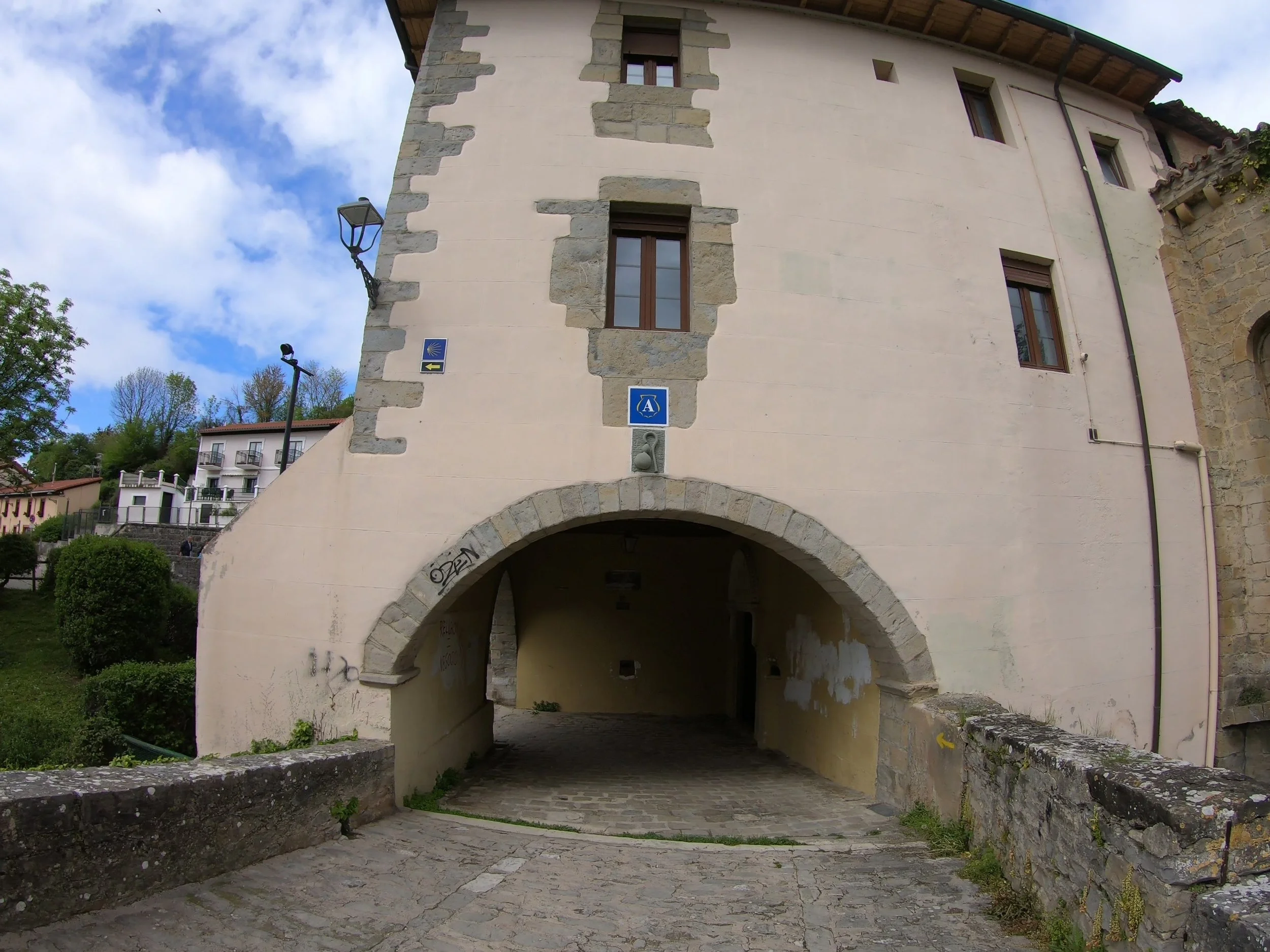
The Old Quarter opened up into narrow alleyways with colorful buildings, wrought iron balconies, and the kind of atmosphere that's genuinely hard to capture on camera. Pamplona is a city that deserves more than a passing visit, which worked out perfectly because we had planned rest days here anyway.
We rented an apartment called El Rincón de Lali through Booking.com, located just off Plaza de San Nicolás in the heart of the Old Quarter. Three nights cost us $207.46 total. Having a full kitchen and a real bed after sleeping in albergues was worth every penny, and the location put us steps from everything.
What To Know Before Stage 3
Water and Food Stops
Water sources between Zubiri and Larrasoaña are surprisingly limited, and village bars don't always open every day. Carry enough water for the first 10 km. Larrasoaña has a few options for food and drinks, and the bar at Zuriain serves a fantastic tortilla if it's open.
Once you hit the Pamplona suburbs, cafés and shops become easy to find.
Navigation
The yellow arrows and shell markers keep you on track through the valley, and the trail is well-worn by the thousands of pilgrims who walk it each year. The only tricky section is navigating through the Pamplona suburbs, where Camino markers can get lost among urban signage. Keep your eyes on the ground for brass scallop shells embedded in the sidewalk.
The Bus Option
Buses run regularly between Zubiri and Pamplona, and the ride takes about 40 minutes for just a few euros. You can catch one from the main road in Zubiri.
Day 3 Spending Breakdown
We booked El Rincón de Lali for three nights because we had planned rest days in Pamplona to work, heal, and eat our weight in tortilla patata (I had four in three days... no regrets). The apartment came out to roughly $69 per night, which is a steal for a private place in the Old Quarter with a kitchen.
Our full Pamplona spending breakdown (covering all three nights plus food and sightseeing) will be in the upcoming Pamplona city post. For the walking day itself, the only real cost was the bus ticket for me and whatever snacks Ryan grabbed along the trail.
Frequently Asked Questions
How long is Stage 3 of the Camino Frances?
Stage 3 from Zubiri to Pamplona covers approximately 21 kilometers (about 13 miles). The terrain is mostly flat along the Arga River valley, making it one of the easier stages in the first week. Most pilgrims complete it in 5 to 6 hours of walking.
Is the walk from Zubiri to Pamplona difficult?
The walk from Zubiri to Pamplona is considered easy by Camino standards. The trail follows the Arga River through a gentle valley with minimal elevation gain. After the steep climbs of Stages 1 and 2, most pilgrims find this stage to be a welcome recovery day.
Can you take a bus from Zubiri to Pamplona?
You can take a bus from Zubiri to Pamplona if you need to skip this stage. Buses run regularly along the main road, the ride takes about 40 minutes, and it costs just a few euros. Skipping a stage by bus is common among pilgrims dealing with injuries or fatigue, and your Camino is still valid.
Where should you stay in Pamplona on the Camino?
Pamplona offers everything from pilgrim albergues to hotels and rental apartments. We stayed at El Rincón de Lali, a Booking.com apartment off Plaza de San Nicolás for $207.46 over three nights. If you're planning rest days, a private apartment with a kitchen saves money on meals and gives your body space to recover. Check our packing list for what to bring along.
Next up, we explore Pamplona itself (cathedrals, tortilla patata, and all those colorful alleyways). Stay tuned for the Pamplona city guide, and check out our packing list if you missed it.
This post may contain affiliate links. If you book through our links, we earn a small commission at no extra cost to you. It helps keep us on the trail.